MILO Magazine · September 2009
Ironheart.
How a fifteen-year-old training in his family’s attic became the man who built Southern lifting.
By William Crawford, M.D.

Jack King started training in his family’s attic at fifteen. There was no gym in the neighborhood, no coach, no program. Just a barbell, a ceiling that was too low for overhead presses, and a kid who wanted to get stronger. That was Greensboro, North Carolina, in the early 1950s.
He found his way to the local YMCA, where he discovered Olympic lifting: the snatch, the clean and jerk, the press. The movements felt right. He entered his first meet in 1955 and never stopped competing.
The York Connection
Through Bill Starr, the legendary strength coach who would later write The Strongest Shall Survive, King connected with the York Barbell Club, the epicenter of American competitive weightlifting. That connection changed everything.
York was where the standards were set. Where the best lifters in the country trained side by side. Where technique was refined and records were made. King absorbed everything he could and brought it home to the Carolinas.
“Weight training and physical conditioning are routes to a more powerful life through the inner force developed via physical excellence.”
Jack King

Building the Southern Scene
By 1970, King was one of the strongest men in the Southeast. At the Southern U.S. Regionals that year, he pressed 300 pounds, snatched 260, and clean and jerked 340. These were numbers that turned heads well beyond the Carolinas.
But King’s impact went beyond his own lifts. He was building infrastructure: coaching younger lifters, organizing meets, setting standards for what serious training looked like in the South. He became the pivotal figure who transformed Southern lifting from a scattered collection of garage gyms into a legitimate competitive scene.
Under his guidance, lifters dramatically improved. Jimmy Bishop advanced from a 720-pound powerlifting total to 910 pounds. The Roten brothers became elite light heavyweights. The gym on Peters Creek Parkway became the center of gravity for serious lifting across the region.
The Natural Bodybuilder
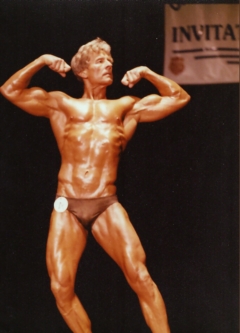
In the late 1970s, King turned his attention to bodybuilding: natural bodybuilding. No drugs. No shortcuts. Just the iron, the diet, and decades of accumulated training knowledge.
Over the next twenty years, he won 29 competitions, all drug-free. The culmination came in 1997, when he won the AAU Mr. America, followed by the Masters’ Mr. Universe in 2002.


The Gym That Endures
The gym Jack King opened in 1976 is still there on Peters Creek Parkway. The platforms, the power racks and the competition benches are real. The records on the wall are real, and they keep falling.
By William Crawford, M.D. Originally published in MILO Magazine, September 2009. Republished with permission.